Showing posts with label mountain men. Show all posts

Monday, May 16, 2016

Epilogue to an Era

By 1840 the beaver trade was done.  A conversation with a trapper in 1846 shows that some held out hope years later..."Beaver's bound to rise.  Human nature can't go on selling beaver a dollar a pound.  That ain't a going to shine much longer.  There was times six dollars a skin." 

Most trappers had moved on to other things by 1846.  Some took to writing such as James Beckwourth   Much of what was written by the former trappers were tales spun to excite readers with a bit of fact woven in, but it did add new weight to the growing legend of the American West as the home of heroes.

Other former trappers became hunters for trading posts - decimating the buffalo herds for carriage robes, coats, rugs and shoe lining.  A good number of trappers left the mountains all together, moving on to the West Coast where they tried their hand at ranching.

Jim Bridger, Tom Fitzpatrick, Joseph Walker and Kit Carson went on to play major dramatic roles in taming the West.  Bridger built a trading post on the Oregon Trail in SW Wyoming.  Settlers stopped at Bridger's Fort for decades to learn route information and gather supplies.  Fitzpatrick and Walker became wilderness guides of legend.  Carson is remembered simply as the "pathfinder's pathfinder."
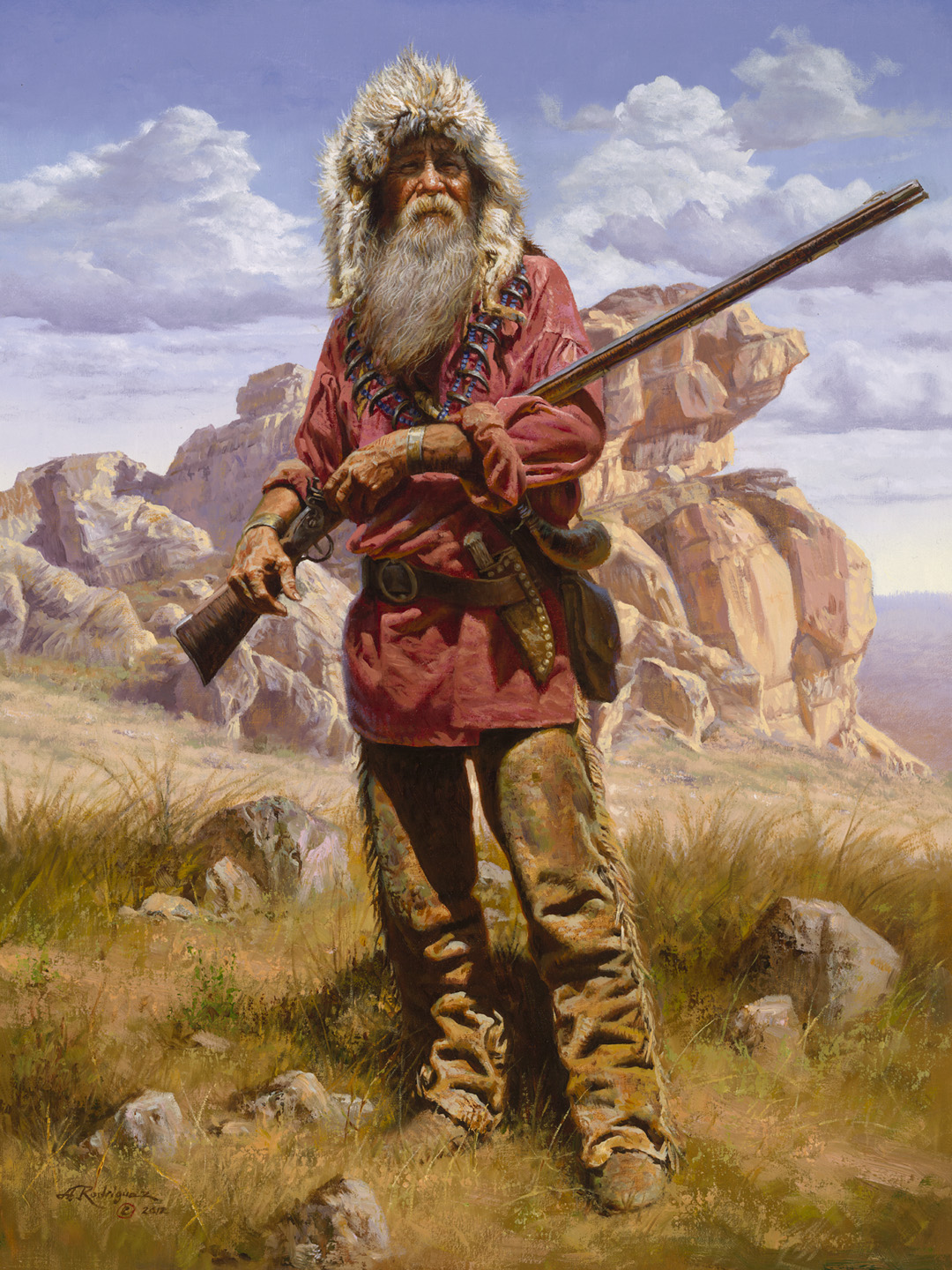
To sum up the life of the trapper best, Washington Irving wrote:

"No toil, no danger, no privation can turn him from his pursuit.  His passionate excitement at times resembles a mania.  In vain may cruel savages bisect his path, in vain the rocks may oppose his progress but let a single track of beaver meet his eye and he forgets all dangers.  At times he may be found scaling the most frightful precipices, searching for springs and lakes unknown to his comrades, where he may meet with his favorite game.  Such is the mountaineer, the hardy trapper of the West, and such is the wild, Robin Hood kind of life now existing among the Rocky Mountains." 

Next time - Inside Bent's Fort


_________________________
Today in Pioneer History: "On May 16, 1881, Dick Fellows, an inept horseman but persistent outlaw, becomes a free man after spending five years in the San Quentin prison.

Monday, May 9, 2016

Where'd the Beaver Go?

Like most things in history, greed took its toll on the wildlife in the new American West.  The beaver was declining at a rapid rate.  Too many competing trappers and trading companies, along with the desire for beaver pelts for fashion were decimating the wild beaver population.

Increased Indian hostility toward the over 600 trappers now in the western mountains were also increasing.  The invasion of tribal lands, dwindling number of buffalo, and thinning herds made even the friendly tribes on edge.

The American Fur Company under John Jacob Astor had moved west, establishing trading posts at Fort Union on the Yellowstone River and Fort Piegan on the Marias, and breaking up or buying out smaller firms that got in their way.  The company even considered arson to discourage any competitors!

By the mid 1830s the "writing was on the wall" so to speak concerning the beaver trade.  The mountain men were so successful and so efficient in tracking and trapping the critters that the streams and rivers were almost denuded of beaver.  Trappers had to travel much farther distances to find even less beaver to trap. 

The worth of beaver pelts was also declining from $6 a pelt in 1830 to scarcely $1 a pelt a few years later.  Fashion now favored silks from China, or coonskin caps for the Russians and Eastern Europeans. 

The last great trapper rendezvous was held in 1837...we will visit that party next time.
__________________________
Today in Pioneer History: On May 9, 1887, Buffalo Bill’s Wild West show opens in London, giving Queen Victoria and her subjects their first look at real cowboys and Indians.

Thursday, April 7, 2016

Joseph Reddeford Walker

With his good looks and plumed hat and 6' stature, Joe Walker was the romantic stereotype of the mountain man.  His escapades with ladies were legendary - so was his knowledge of the West.

Walker operated as trapper and trader out of Independence, Missouri for 12 years, was sheriff of Jackson County until a promise of waters rich in beaver, wine and women lured him on an expedition to California in 1833.  Walker understood the ways of the Indian, was kind and affable to men, and loved to explore unknown regions.

From Salt Lake down the Humboldt River, over the Sierras near Yosemite and reaching the Pacific Coast, Walker covered most of the West.  In 1833 he discovered Walker Pass in the San Joaquin Valley.  Walker Pass provided an easy wagon train trail around the south end of Sierra Nevada. In 1869 the transcontinental railroad would follow the Humboldt River route.

After Joe married an Indian chief's daughter who was lost (along with is children) to cholera, his career would span 47 years as a trapper, trader and guide.  He advised wagon trains to California, bought and sold cattle and led gold prospecting parties to California and Colorado. 

His lists of "firsts" equals and surpasses Jedediah Smith's in the discovery of the West.

When his eyesight began failing, he retired to his ranch in California where he died at the age of 78.  For more in depth on Joseph Walker - search this blog...we have followed him from his birth through his life. 

Next time...Trapper Wives
______________________

Today in Pioneer History: On April 7, 1805 after a long winter, the Lewis and Clark expedition departs its camp among the Mandan Indians and resumes its journey West along the Missouri River.

Monday, April 4, 2016

Jedediah Strong Smith

With a butcher's knife in his belt and a Bible in his bedroll, 23 year old Jed Smith entered the Rocky Mountain trade in 1822.  He was a devout Yankee, a son of a New Hampshire Methodist family who like to sing Methodist hymns on the trail.  Jed was clean shaven and the gentleman of the wilderness.

By age 25, he had survived an Arikara massacre, being mauled by a grizzly bear (and went back on
the trail within 10 days), and led an expedition to the Wind River.  He traveled through the South Pass, opening the mountains to later settlers traveling to Oregon and California.

At age 26, Smith held the single season record for beaver pelts with 688.  In the next year he partnered with two other mountain men, Jackson and Sublette.  They were to explore the Snake River to the north, while Smith would go south to find the fabled Buenaventura River which was said to flow westward through mountains to the coast.

Jedediah wandered through the wilderness for three years, never found "Buenaventura River" but left a legacy of "firsts" unmatched by any other except Joseph Walker...

* first white man overland from Rockies to California
* first white man to cross the Great Salt Lake Desert
* first white man to cross the Sierra Nevada from west to east
* first white man overland from Southern California to the Pacific Northwest

Smith returned to St. Louis in 1830.  City life was not for him and in 1831 he saddled up for Santa Fe - and rode to his death at 32 by an ambush by Comanche Indians.  His gutted body was eaten by prairie wolves, and where his bones were left no one ever found along the Santa Fe Trail. 

Jedediah along with the next mountain man stood in history as responsible for opening the west to America...

Next time...Joseph Reddeford Walker
________________________________
On this Day in Pioneer History:  On April 4, 1843, William Jackson is born in Keeseville, New York. His powerful photographs of Yellowstone helped make it the first national park. Jackson received no formal training in photography. As a young man, he began experimenting with simple cameras, and he gradually mastered the arcane skills needed to capture images on chemically prepared glass plates. In 1866, Jackson joined a wagon train and traveled west to California, lugging along his heavy camera equipment. The awesome size and ruggedness of the western landscape sparked his imagination, and he began to focus his efforts on what would later be termed “nature photography.”

Thursday, March 31, 2016

The Life of a Mountain Man

The system that Mr. Ashley created worked so well that by the 1826 rendezvous, he was ready to retire, selling out to Jedidiah Smith and two other mountain men.  Four years later, Smith along with Jim Bridger, Joseph Walker, Milton Sublette, and Tom Fitzpatrick became partners in the Rocky Mountain Fur Company.


The company bought pelts from hardy, self-sufficient mountain men, who could live through 
subzero temps, wade in icy cold water daily, outwit and often outshoot hostile Indians.  Most of the year mountain men lived alone or among friendly Indians.  Many times with their skin tanned and roughened by sun and wind, they looked like an Indian.  They dressed in decorated buckskins and seldom bathed.

Intense loyalties in the uncertain lifestyle were few.  The ultimate code was "each man for himself."  Mountain men left seriously injured people alone to heal or die without a weapon.  At yearly rendezvous events they drank and fought deadly duels over trifle gambling disputes or the favors of a squaw - even just a harsh word said in anger.  Danger lurked at every corner, the extremes were a reasonable situation.

Buffalo provided food - soup from buffalo blood and bone marrow, broiled buffalo ribs, raw buffalo liver.  To the easterners the mountain men's stories sounded like a fairytale of romance, adventure and freedom.  When in reality one writer wrote: "habitual watchfulness destroys every frivolity of mind and action.  They ride like men whose breasts have so long been exposed to the bullet and the arrow that fear finds within them not a resting place." 

The life of a mountain men living in the wild west...

Next time...Jedediah Strong Smith
___________________________
Today in Pioneer History: "On  March 31, 1836, the first monthly installment of The Posthumous Papers of the Pickwick Club, by 24-year-old writer Charles Dickens, is published under the pseudonym Boz.

Monday, March 28, 2016

The Quintessential Mountain Man

Jim Bridger was the epitome of the hardy mountain man.  As a child he went from Virginia to the

frontier city of St. Louis with his family.  At 13 he was apprenticed as a blacksmith.  At 19 he became a member of William Henry Ashley's first expedition to the Rockies.  He was a quick learner, tall and with a keen eye.  Although he became a legend as an Indian fighter, he tried to get along with the Indians.  He had three Indian wives, each from a different tribe and each died young.

Bridger's friends called him "Gabe".  He was notorious for his tall tales, but many of his tales were based on real events.  Once he floated down the Bear River to settle a bet on the direction the river flowed, ending in Great Salt Lake (probably the first white man to see it).  Due to the salty water, he believed he was on the Pacific Coast.

Most of Bridger's maps were the most accurate of maps available.  Although he was illiterate, he spoke French, Spanish and several Indian languages. 

He roamed the Rockies as a trapper, trader and eventual partner in a fur company.  In 1843 he built a fort on the Oregon Trail where he sold supplies, did repair work, and gave advice to travelers.  For 10 years he was successful until a raid by the Mormon vigilantes destroyed the fort.  Bridger moved his family to a Missouri farm, came back alone to the West as a guide.  He was a scout for the U.S. Army in the "Mormon War". In 1866 he marked the Bozeman Trail from Nebraska to the Montana gold mines.

Bridger was disabled by arthritis and failing eyesight when he retired in 1867.  By then the coming of the railroads saw the end of the West that Bridger so loved.

Next time...Life in the wild
_________________________
Today in Pioneer History:  On  March 28, 1776, Juan Bautista de Anza, one of the great western pathfinders of the 18th century, arrives at the future site of San Francisco with 247 colonists.

Thursday, March 24, 2016

The New Gang in Town

Manuel Lisa did well with his Missouri Fur Company.  When he died in 1820 of natural causes, he actually was a man of respectability and wealth, but there were two fellow St. Louis residents whose wealth soared over Lisa's.

William Henry Ashley and Andrew Henry started advertising in 1822 in local newspapers for "enterprising young men" willing to ascend the Missouri River to the source.  The list read like a who's who of mountain men - Jim Bridger, James Ayman, William and Milton Sublette, Edward Rose, Jim Beckworth, Thomas Fitzpatrick and Jedediah Smith.

Smith and Fitzpatriick were well educated.  Bridger was illiterate.  Rose who was half black, half Cherokee, had been a pirate on the Mississippi.  All were believers in adventure.

In 1822 the men moved up the Missouri by boat to build a fort and trading post.  After an attack by Indians, they set out in small groups, trading a portion of their catch for a year's provision. 

Henry retired in 1824 but Ashley continued the yearly "rendezvous" where he collected the pelts and re-provisioned the men as a representative from St. Louis.  Thus was born the freelance white trapper who is "the mountain man" as we know them today.  The rendezvous became highly anticipated as a frontier party where businessmen traded goods for pelts amid drunkenness, high stakes gambling, amid contests of strength and an atmosphere of mayhem. 

Next time...Mr. Bridger
__________________________
Today in Pioneer History: "On March 24, 1834, the great western explorer and conservationist John Wesley Powell is born near Palmyra, New York.  A soldier, teacher, explorer, geologist, and anthropologist, Powell played a pivotal role in the settlement and development of the American West.


Monday, March 14, 2016

Mountain Men Beginnings

he first to exploit North American resources for profit were the French in the 17th century.  When England gained the monopoly over the fur trade in 1763, their Hudson Bay Company moved all the way to the Rockies by 1787,

The first mountain men encountered Lewis and Clark's expedition in 1806.  Around the Yellowstone River, 150 miles from St. Louis, they came across a couple of shaggy beaver trappers - Joseph Dickson and Forrest Hancock who had left Illinois in the summer of 1804. 

The American trappers asked if anyone in the expedition would like to join them on the hunt.  Pvt. John Colter of Virginia, along with a couple of other men, were eager to go.  The Trappers moved along the river making winter camp in a Rocky Mountain Valley.  By spring, the two companions had had enough and headed back to the expedition.  Colter however, stayed on to trap, hunt, and hone his wilderness skills.

By 1807 Colter was in St. Louis to sell his catch.  He met one swarthy Manuel Lisa, a St. Louis businessman and schemer.  He was ruthless, unprincipled, and violent, but he could sniff out profit from 1000 miles.  Genius or just a crook, in 1807, he took 50 frontiersmen into two boats up the Missouri to the Far West.  John Colter was among them as a guide.  They halted at the Yellowstone and Big Horn River to build a fort. 

Next time...the Story of John Colter continues
_____________________________
On this Day in Pioneer History: On March 14, 1879, Albert Einstein is born, the son of a Jewish electrical engineer in Ulm, Germany. Einstein’s theories of special and general relativity drastically altered man’s view of the universe, and his work in particle and energy theory helped make possible quantum mechanics and, ultimately, the tomic bomb.

Thursday, March 10, 2016

Moutain Men Move West

For the next few posts we are going to look back at somewhere we have already been in this blog - the early mountain men and fur trappers.  We took an extensive trip across the life of Joseph Walker a while back that you can search the blog for if you want an eye-witness account of that kind of life.  Here I am just including a bit because it fits chronologically in the development of the West...

The lucrative fur trade was always a part of the trappers story.  Loving the wilderness, leaving the life of the town and the farm, these hunters/trappers were known as "mountain men".   These rugged men learned Indian ways, had expert survival skills and were extremely tough.  Their days of glory lasted a little more that two decades, but their legend is a permanent part of the history of the American West and the pioneer.

As the pioneer settlers came, the mountain men moved on further west.  They were always two steps ahead of civilization.  They weren't looking for gold, or for land, but for an animal.  At the time it was beaver fur that was fashionable.  The pelts (called "heavy bank notes") were worn as coats and hats in Europe and America.  There was a time when American rivers swarmed with beaver, but money from the beaver pelts made fortunes.  So no one took notice for 20 years, as the beaver was slaughtered to the point that there was none to hunt - and the trappers livelihood ended.

Next time...How it all started.
_______________________
Today in Pioneer History: "On March 10, 1864, local hell-raiser Jack Slade is hanged in one of the more troubling incidents of frontier vigilantism in Montana. Slade stood out even among the many rabble-rousers who inhabited the wild frontier-mining town of Virginia City, Montana. When he was sober, townspeople liked and respected Slade, when drunk, however, Slade had a habit of firing his guns in bars and making idle threats. Finally fed up with his drunken rampages and wild threats, a group of vigilantes took Slade into custody. Slade, who had committed no serious crime in Virginia City, was hanged.

Wednesday, August 21, 2013

What Makes a Good Husband?

Indian women saw white men as safer, more considerate, less demanding and less disciplinary.  To them, white men were rich, valiant,  warriors, energetic hunters, and shrewd traders.  Who could ask for more?

It was the ultimate status symbol to attract, keep and support a good white man - like a Coach bag on your arm!
Joe Meek, when he married a Shoshoni - Mountain Lamb - is said to have spent his entire year's profit on his bride - $300 horse, $150 saddle, $50 bridle, $200 worth of blankets, boots, beads and a blue broadcloth skirt, scarlet blouse, and leggings. Mountain Lamb was one of the great beauties of the frontier west and Meek was very much smitten.

Next Time - The Mysterious Joe Walker

Sunday, August 18, 2013

What Makes a Good Wife - Part 2

The white mountain man was attracted the Indians women because they made great housekeepers, home economists, and mothers, but also for maintaining supplies and equipment needed in the man's business - putting up lodges, tanning hides, cooking, protecting provisions.  Indians men took these skills for granted - white men saw them as blessings.

Beyond the sexual, Indian women cared for the mountain men's comforts - interpreters, guides as well as forging for herbs, making clothing, tending and moving camp.  Seems all the men did was procreate, eat, fight and smoke pipes!

The white man was able to marry well and regarded their Indian wives as far superior, prettier, cleaner, more stylish, seductive and far more useful than white women. Their biggest problem was not getting one, but choosing from the many offers received!

Next time...What makes a Good Husband!

Sunday, July 28, 2013

Allied with the Indian Tribes

For a brief time before the settlers and soldiers arrived (12 years), the remaining mountain men lived well.  The elite group included Jim Bridger, Kit Carson, Crazy Bill Williams, William Bent and Joe Walker.  They were scattered over a huge unsettled area from the central plains and upper Missouri to the Sonoran Desert and the Sierras.  They had one thing in common - they each had a special relationship with one or two of the important Indian nations.  The only white who remained and did well were established good businessmen and bartered with the Indians for pelts.

Their tribes included:

Bent and Carson --- Cheyenne and Arapaho
Bridger --- Shoshoni
Beckworth --- Crow
Williams --- Ute
Walker --- Snake

Next time...a Special Exception

Monday, May 6, 2013

The Paiutes Incident

Captain Walker encountered the Paiute Indians, who began following his group of men. Supposedly fascinated by their equipment, the Indians began to be adept at pilfering - but Walker refused his men vengeance .

Bill Craig, Levin Mitchell, and Crazy Bill Williams in particular, those with a murderous reputation, decided while hunting one day that they would kill a few Paiutes against the Captain's orders.  They did it again the next day but this time Walker caught on.  It is not known what discipline Walker meted out, but the killings stopped abruptly.  

That's not the end of the story...

The next morning the Paiutes were back at Walker's camp.  Walker and his men were moving camp and the Indians would cut in front of them to delay the move.  80-100 Paiutes came forward which made Walker quite nervous, but his cool temperament ruled and he gave orders for the charge. When it was all over 30 Paiute lay dead in the field, and the remainder ran into the high grass in every direction howling like wolves.    
 
What could or should have been done on that day is a matter of judgment in the history books.  Walker lived it first hand, his critics of the day did not.  He accomplished what needed to be done - the Paiutes were gone and his party continued crossing the Humboldt River on rafts through regions where no white man had ever gone before, passing what later became Carson Lake, Walker Lake and Walker River, toward the mountains.  

Next time - Out of Options...  

Tuesday, April 30, 2013

Take a Joke, Joe

During the Great Salt Lake expedition, Walker met up with some Bannocks, a Shoshoni people given to murder and thievery with a bad reputation among mountaineers.  Walker, however, seemed to have gotten on well enough by camping with them and exchanging small tradegoods for topographical information.   From this Walker decided to go directly through the salt desert to the upper reaches and the Humboldt River and follow it downstream.  

The only truly funny story that exists about Joseph Walker takes place here when he was concerned that the River which was actually 5" of thick mud, was indeed a deep stream.  Walker dove right in - then reportedly threatened to kill the person responsible when laughter broke out at meal time where he eyelids were still caked with mud.  It was never mentioned on the trail again.  

Next time... The Paiuntes Incident

Sunday, April 21, 2013

A Band of Merry Men

Once Leonard was in place, Walker recruited some of the boldest and most experienced mountain men around - and also the most unruly and difficult to lead.  Enter Crazy Bill Williams, the savage, talk-to-yourself guy from the Santa Fe days, one Levin Mitchell who later became known as the most notorious frontier thief, George Nidever, one of the best rifle shots in the West, Powell Weaver and Bill Craig, who fled the East after killing a man, and finally Joe Meek, the partier who ran away at 16 after beating his teacher.

What a bunch of guys!  

Each man was given 4 horses, equal shares of blankets, buffalo robes, provisions and every article of comfort for an expedition of its kind.  The men looked on Walker as a "good leader, one of the best, a good hunter, a good trapper, thoroughly versed in Indian signs, and possessing a good knowledge of the mountains", said Nidever.  

Next Time...They're Off! 

Saturday, March 2, 2013

Not So Fast!

During this time the Rocky Mountain Fur Company (RMFC) tried to make a deal that would divide the territories between the fur companies, but the American Fur Company (AFC) refused.

The AFC's plan was to follow the RMFC veterans, letting them guide them to the best beaver spots but Jim Bridger was too smart for that and instead led them on a wild goose chase deep into Blackfoot territory.

In the end one half of AFC's men were killed or wounded and the RMFC seemed to have won except that Bridger was shot 2 times in the back with arrows that he would carry with him for years.

Next time...Ambush!

(for more info on fur companies in the early west, see earlier posts in this blog)

Tuesday, February 26, 2013

Parting is Such Sweet Sorrow?

Walker returned to Fort Nonsense with his group of free trappers.  Bonneville found them as interesting as the Delaware and one convinced him that a much better camp for the winter lay 200 miles west on the Salmon River.

Surprisingly Bonneville quickly agreed which got Captain Walker wondering why Bonneville built the fort - maybe for entirely different reasons than fur trapping over the winter. Nevertheless they stored extra supplies at Fort Bonneville, then packed up and moved to the Salmon River.

The Salmon River offered little improvement in shelter, game or trapping for the winter.  Walker thought it a miserable establishment - not even sheep could be found for food.  Walker had no intentions of spending the winter of 1832-33 at this camp.  Walker began to think that this might just be a way for the fur companies to get rid of Bonneville - to an isolated place where he would be too busy trying to survive to do much fur trapping.

By this time Old Joe realized that it was impossible to educate Bonneville and to continue on with him would not only cost him his reputation with other mountain men, but may affect his own survival as well.

So two days after arriving, Walker took 20 men and left, heading northwest to the Madison River to trap beaver.

Next time..Not so fast buster...

Saturday, May 26, 2012

A Handsome Pioneer

Standing 6'2" and weighing 200 pounds, Joseph Walker was remarkably handsome, but it was his kindness, modesty, courtesy, elegance, and wilderness skills that gained him his reputation.

Joe was a peacemaker who lived with Indians and had the rapport to address any injustice he saw between the white man and the Indian.

In describing Walker, historian John McBride said, "His dress was a marvel of adaption to his business - rich and simple, buckskin throughout.  A loose fitting coat and pants, richly ornamented with threads of silver and gold wire made by hand, a broad sombrero to keep off the sun.  Mounted on a noble looking roan horse of Spanish blood, on a Mexican saddle, with spurs whose rowels were 6" in diameter of polished steel plated with gold at his heels, with a rifle across his saddle bow...he seemed born to rule the wild spirits around him without effort and they acknowledged him as their leader without controversy."

Walker never publish his memoirs or commented in interviews, and although he did keep an exact journal for some years, he lived a decent, principled life which only men of great strength and confidence can sustain.  Walker had a distaste for what we now call "tabloid or sensational journalism"

Next time - back to the 1700s West Virginia where it all began...


Monday, May 21, 2012

Meet Joseph Walker

Joseph Walker was one of the first mountain men, fur trappers and traders in the West.  Characteristic of mountain men, he possessed common sense, bravery, the ability to shoot straight, ride hard, fight ferociously, and the ability to bear up and function during formidable hardship.

Joe Walker, aka Captain Joe, was a leader of those to come behind - he taught Kit Carson, when Kit was a greenhorn of the West.  Among Walker's important life achievements:

*1825 - guided a government party which surveyed and marked the Santa Fe Trail
*1827 - one of the founders and first sheriff of Independence, Missouri
*1833 - led the first Americans to the Pacific Ocean through the unknown and uncharted Sierras
*1833 - first white man to see Yosemite
*1843 - guided the first wagon train to California territory
*1860s - Led a party of American into central Arizona through Apache land to Prescott gold fields

Only one man is reported to have died following Walker in 50 years - and that was said to be because the man didn't follow Joe's warning.

Note:  Most of my information about Joseph Walker used in the next few months comes from a book The Westering Man - the Life of Joseph Walker, by Bill Gilbert in 1983.  Visit your public library, grab a copy and read along. It is an amazing book about an amazing man of pioneer history!  ''

Next time - a physically handsome pioneer!

Wednesday, May 16, 2012

Kit Carson

Kit Carson was probably the best known of the mountain men.  In the 1830s it was said that not even Daniel Boone was "so much on the move throughout a long and restless life" as Kit Carson.  

Carson was physically a small man, but inexhaustible which attests to the fact that he made the 3,000 miles journey from California territory to Washington through hostile Apache lands with the news of the Bear Flag Republic victory.

Before his death at Fort Lyon, Carson lay on his buffalo robe and demanded his pipe and a big dinner.  He was warned that both would probably kill him, to which he is said to have replied, "No matter.  Bring me some fust rate doin's, a buffalo steak, my pipe and a bowl of coffee".  After eating 2 pounds of meat and smoking his pipe, Carson died.  He received a funeral with general's honors and as he wished was buried at Taos.

Next time we start our journey with the greatest mountain man of them all, Joseph Walker.