Showing posts with label beaver trapping. Show all posts

Monday, May 16, 2016

Epilogue to an Era

By 1840 the beaver trade was done.  A conversation with a trapper in 1846 shows that some held out hope years later..."Beaver's bound to rise.  Human nature can't go on selling beaver a dollar a pound.  That ain't a going to shine much longer.  There was times six dollars a skin." 

Most trappers had moved on to other things by 1846.  Some took to writing such as James Beckwourth   Much of what was written by the former trappers were tales spun to excite readers with a bit of fact woven in, but it did add new weight to the growing legend of the American West as the home of heroes.

Other former trappers became hunters for trading posts - decimating the buffalo herds for carriage robes, coats, rugs and shoe lining.  A good number of trappers left the mountains all together, moving on to the West Coast where they tried their hand at ranching.

Jim Bridger, Tom Fitzpatrick, Joseph Walker and Kit Carson went on to play major dramatic roles in taming the West.  Bridger built a trading post on the Oregon Trail in SW Wyoming.  Settlers stopped at Bridger's Fort for decades to learn route information and gather supplies.  Fitzpatrick and Walker became wilderness guides of legend.  Carson is remembered simply as the "pathfinder's pathfinder."
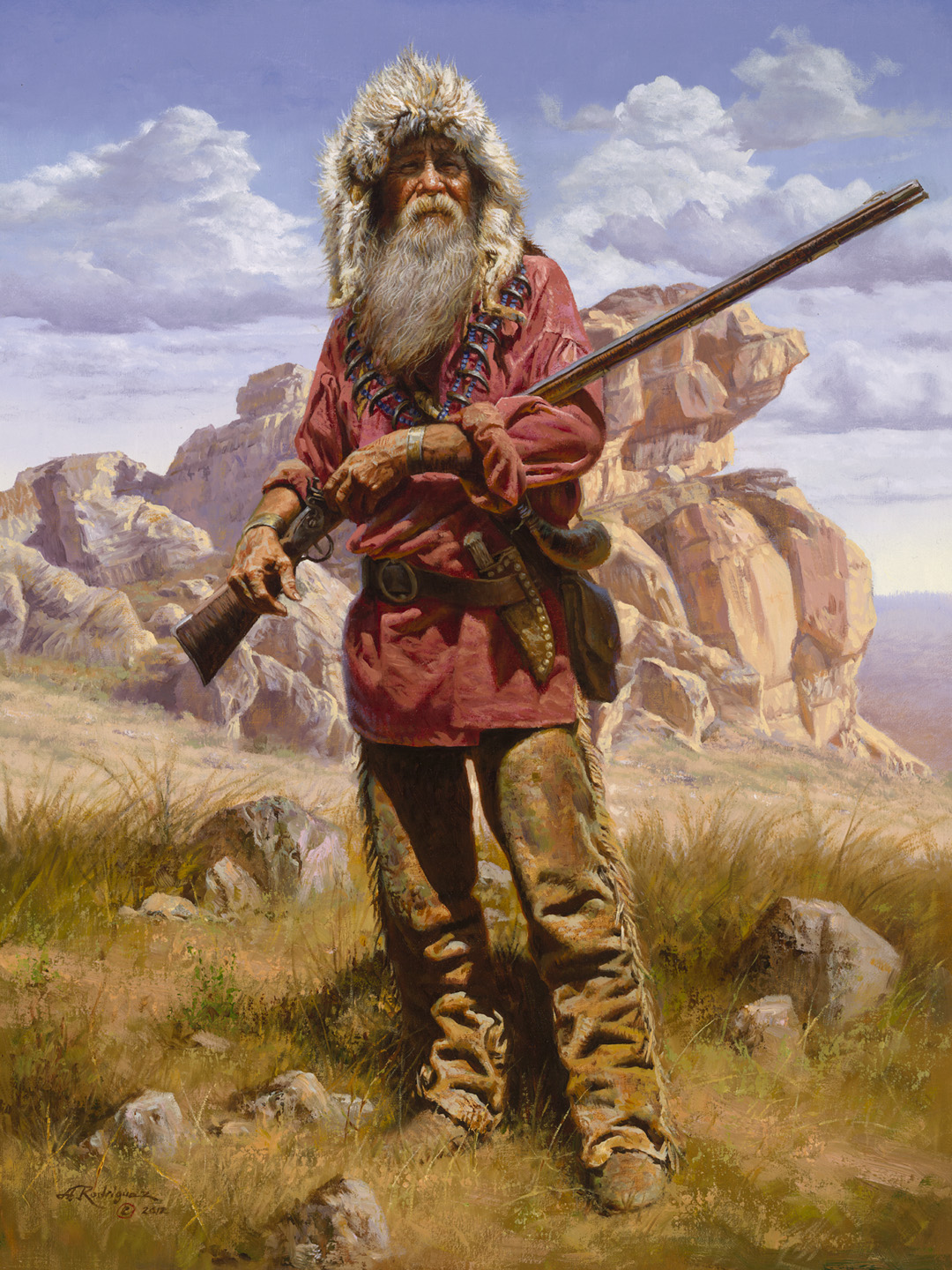
To sum up the life of the trapper best, Washington Irving wrote:

"No toil, no danger, no privation can turn him from his pursuit.  His passionate excitement at times resembles a mania.  In vain may cruel savages bisect his path, in vain the rocks may oppose his progress but let a single track of beaver meet his eye and he forgets all dangers.  At times he may be found scaling the most frightful precipices, searching for springs and lakes unknown to his comrades, where he may meet with his favorite game.  Such is the mountaineer, the hardy trapper of the West, and such is the wild, Robin Hood kind of life now existing among the Rocky Mountains." 

Next time - Inside Bent's Fort


_________________________
Today in Pioneer History: "On May 16, 1881, Dick Fellows, an inept horseman but persistent outlaw, becomes a free man after spending five years in the San Quentin prison.

Monday, May 9, 2016

Where'd the Beaver Go?

Like most things in history, greed took its toll on the wildlife in the new American West.  The beaver was declining at a rapid rate.  Too many competing trappers and trading companies, along with the desire for beaver pelts for fashion were decimating the wild beaver population.

Increased Indian hostility toward the over 600 trappers now in the western mountains were also increasing.  The invasion of tribal lands, dwindling number of buffalo, and thinning herds made even the friendly tribes on edge.

The American Fur Company under John Jacob Astor had moved west, establishing trading posts at Fort Union on the Yellowstone River and Fort Piegan on the Marias, and breaking up or buying out smaller firms that got in their way.  The company even considered arson to discourage any competitors!

By the mid 1830s the "writing was on the wall" so to speak concerning the beaver trade.  The mountain men were so successful and so efficient in tracking and trapping the critters that the streams and rivers were almost denuded of beaver.  Trappers had to travel much farther distances to find even less beaver to trap. 

The worth of beaver pelts was also declining from $6 a pelt in 1830 to scarcely $1 a pelt a few years later.  Fashion now favored silks from China, or coonskin caps for the Russians and Eastern Europeans. 

The last great trapper rendezvous was held in 1837...we will visit that party next time.
__________________________
Today in Pioneer History: On May 9, 1887, Buffalo Bill’s Wild West show opens in London, giving Queen Victoria and her subjects their first look at real cowboys and Indians.